

Lower Resistance Is Not Always Better for ESD-DLC: Complete Validation from Surface Resistance and Post-Wear Electrical Performance to the Grounding P
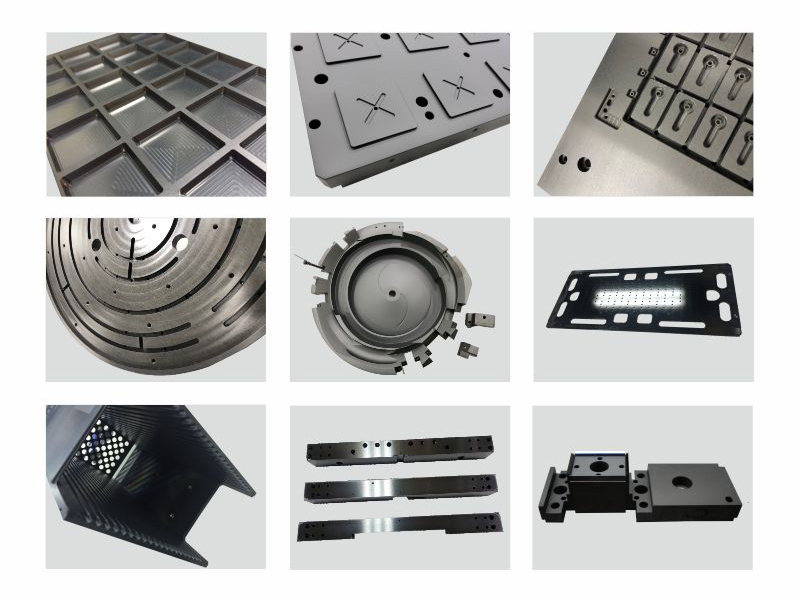
In semiconductor manufacturing, automation equipment, and precision electronics production, many components undergo repeated contact, gripping, sliding, and handling every day. Typical examples include robotic grippers, guide rails, positioning fixtures, carrier trays, and precision contact components. Friction can scratch these surfaces, generate wear debris, or alter critical dimensions. Repeated contact and separation between materials can also cause electrostatic charge to accumulate.
Conventional DLC (Diamond-Like Carbon) coatings are commonly used to improve the wear resistance and frictional performance of components. However, when an application also involves electrostatic-sensitive devices, addressing wear alone is not enough. Creating Nano Technologies' ESD-DLC is designed to add controlled electrostatic dissipation to the surface-protection functions of DLC, helping components meet both mechanical service-life and ESD management requirements.
Why Is Lower Resistance Not Always Better for ESD-DLC?
The purpose of electrostatic control is to release charge through an appropriate path in a predictable manner—not simply to make a material “as conductive as possible.”
If resistance is too high, charge may not dissipate quickly enough. As resistance decreases, the discharge rate and transient current may also change depending on the system's resistance, capacitance, contact conditions, and grounding design. The appropriate electrical target must therefore be defined according to the component's function, contact materials, equipment cycle time, tolerance of sensitive devices, and the customer's ESD requirements.
This is why Creating Nano Technologies does not treat a single resistance value as the complete answer in an ESD-DLC project. The real question is whether the coated component can maintain a reliable electrostatic dissipation path under actual assembly and operating conditions.
Which Applications Are Suitable for Creating Nano Technologies' ESD-DLC?
ESD-DLC is particularly suitable for precision components that experience friction and contact while also requiring electrostatic control, including:
-
Grippers and positioning fixtures used to handle semiconductor wafers, carriers, or electronic components
-
Sliding guides, stops, and repeatedly contacting components in automation equipment
-
Precision surfaces that are prone to electrostatic particle attraction
-
Contact, support, or transfer components in electronic assembly and inspection equipment
-
Custom components that require wear resistance, low friction, and electrostatic dissipation to be evaluated together
Actual suitability must still be assessed according to the substrate, heat-treatment condition, component geometry, dimensional tolerances, load, speed, counterface material, cleaning method, and operating environment. Creating Nano Technologies does not apply one set of conditions to every component. Instead, we work backward from the customer's failure modes and electrical requirements to define the coating and validation plan.
Complete Validation 1: Initial Surface Resistance Cannot Be Judged by a Single Number
Customers often ask, “What resistance value can ESD-DLC achieve?” Without defined test conditions, however, a single value is difficult to compare meaningfully.
Surface resistance, point-to-point resistance, and resistance to ground represent different measurements. Test voltage, electrode configuration, contact pressure, measurement time, temperature, and humidity can also affect the results. For curved, small-area, or geometrically complex components, data from a flat test coupon cannot be assumed to represent finished-part performance directly.
Creating Nano Technologies therefore recommends confirming the following at the beginning of a project:
-
The electrical parameter that the customer actually needs to control and its target range
-
Measurement locations and test methods for both samples and production parts
-
Grounding points and contact methods after the component is assembled
-
Temperature, humidity, cleaning, and operating-environment conditions
Only after these conditions have been clearly defined can measurement data be repeatable and serve as the basis for production control and service-life evaluation.
Complete Validation 2: A New Coating That Passes May Not Still Pass After Wear
For repeatedly contacting components such as grippers, guide rails, and fixtures, initial resistance is only the starting point. Long-term friction may cause localized coating thinning, wear tracks, contamination, or changes in contact conditions, which can alter the electrical distribution and dissipation performance.
ESD-DLC validation should therefore evaluate mechanical and electrical performance over the same service cycle. In addition to initial data, testing can be planned according to actual operating conditions, including:
-
Friction and wear tests using specified loads, strokes, speeds, and counterface materials
-
Resistance comparisons before and after cleaning or cyclic use
-
Multi-point measurements across worn areas, unworn areas, and edge locations
-
Inspection of coating appearance, wear tracks, adhesion condition, and particle generation
-
Confirmation that the component still meets the customer's electrical requirements after the specified number of cycles
The core value of Creating Nano Technologies' ESD-DLC is not merely the delivery of an initial resistance value. It is helping customers evaluate whether the coating can maintain the required functions throughout its actual service life.
Complete Validation 3: A Dissipative Coating Still Requires Verification of the Complete Equipment Grounding Path
Even if measurements on the coated surface meet the target, charge may remain on the component if insulating spacers, oil films, oxide layers, or unstable contacts interrupt the path after assembly. Conversely, the presence of a grounding wire does not guarantee that every moving contact will maintain a consistent electrical connection throughout the entire service cycle.
The complete path should be verified from the actual contact surface through the substrate, mounting structure, equipment grounding point, and grounding reference. When necessary, measurements should be repeated while the component is moving, under load, or after cleaning to rule out risks caused by changes in contact resistance.
In other words, ESD-DLC is an important surface-engineering solution within an electrostatic management system, but its final effectiveness still depends on the coating, component structure, and equipment grounding design working together.
How Does Creating Nano Technologies Plan an ESD-DLC Project?
Creating Nano Technologies begins with the application rather than using a fixed coating formulation to answer every requirement. The recommended process is as follows:
-
Define the problem: Identify the primary failure modes, such as wear, friction, sticking, particle attraction, or ESD risk.
-
Review operating conditions: Confirm the substrate, drawings, tolerances, load, speed, counterface material, cleaning method, and environmental conditions.
-
Set the targets: Jointly define the electrical parameter, resistance range, wear-cycle requirement, and acceptance method.
-
Validate samples: Apply the coating to test coupons or actual components and conduct pre- and post-coating tests to confirm process feasibility.
-
Verify service life: Compare mechanical and electrical performance before and after wear, cleaning, or cyclic use.
-
Implement mass production: Establish measurement locations, acceptance criteria, and batch-traceability methods based on the validation results.
If your components face both wear and electrostatic challenges, please provide the substrate information, drawings, operating conditions, current failure symptoms, and ESD requirements. Creating Nano Technologies will evaluate the appropriate DLC or ESD-DLC solution for the actual application, helping you move beyond “passing the initial measurement” toward “maintaining stable performance throughout the service life.”
Creating Nano Technologies, Inc. | Custom DLC/ESD-DLC Coating and Application Evaluation
Technical References
-
EOS/ESD Association: ESD Fundamentals—Basic ESD Control Procedures and Materials
-
EOS/ESD Association: ESD Standards Overview
-
IEC 61340-2-3:2016: Methods of test for determining the resistance and resistivity of solid materials used to avoid electrostatic charge accumulation
Creating Nano Technologies, Inc.
59 Alley 21 Lane 279, Chung Cheng Road, Yung Kang City, Tainan, TAIWAN
TEL:886-6-2323927 FAX:886-6-2013306 URL: http://www.creating-nanotech.com