

How to Choose a Plasma Cleaner: A Process Integration Guide
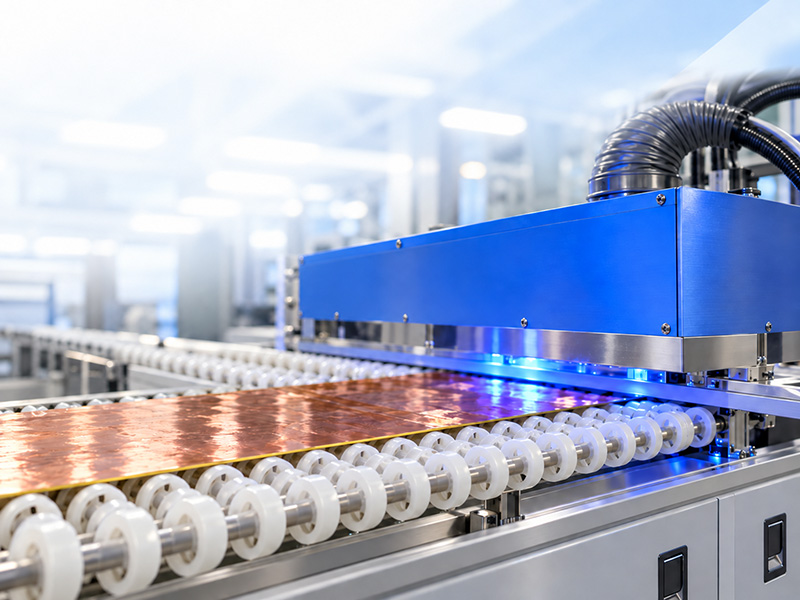
Why does debonding still occur after adhesive dispensing, even when the parts have already been wiped and cleaned? Why does the same adhesive deliver different bonding performance when the substrate or upstream process changes?
The cause may be surface residues invisible to the naked eye, or the material itself may be difficult to wet. A Plasma Cleaner uses appropriate cleaning and surface activation to establish suitable surface conditions for the next processing step.
When evaluating plasma equipment, start with four questions: What does the upstream process leave behind? What can the material withstand? What does the downstream process require? How will the equipment fit into the production line?
1. What Is the Difference Between Plasma Cleaning and Surface Activation?
Plasma uses reactive species generated by energizing a gas to interact with a material’s surface. Depending on the gas, equipment, and processing conditions, plasma treatment can remove certain organic contaminants or modify surface chemistry to improve wetting by adhesives, inks, and coatings.
“Cleaning” focuses on removing unwanted substances, while “activation” focuses on modifying surface properties. Both may occur simultaneously. However, water droplets spreading more readily does not, by itself, confirm that all contamination has been removed.
Before introducing plasma treatment, first clarify whether the objective is to improve cleanliness, wettability, or adhesion, or to remove specific residues.
2. Look Upstream: What Has Been Left on the Surface?
Different types of surface contamination may require very different treatment approaches.
| Surface condition | Key evaluation points |
|---|---|
| Oil films, fingerprints, or thin organic residues | Identify the contamination source and extent, and check whether residues remain after treatment. |
| Mold release agents or processing aids | Provide composition information to assess whether they can be removed and whether they may migrate back to the surface. |
| Photoresist, resin, or similar residues | Distinguish thin residual layers from bulk material removal, and assess whether a dedicated stripping or etching process is required. |
| Metal oxide layers | Evaluate suitable reducing gases and process conditions. General air or oxygen plasma should not be treated as a universal solution for oxide removal. |
Removing metal oxides and cleaning organic contamination involve different treatment objectives. For example, the atmospheric-pressure oxidation–reduction equipment described in publicly available information from Creating Nano Technologies Inc uses specific gas mixtures to reduce metal oxide layers.
3. Check Material Requirements: Effective Treatment Also Means Avoiding Overtreatment
Plastics, glass, metals, and electronic components respond differently to plasma. Even within the same type of plastic, differences in material grade, additives, or existing coatings can affect the surface condition after treatment.
Before selecting equipment, document the following:
-
Substrate, material grade, and surface coatings.
-
Acceptable temperature rise, appearance changes, and dimensional changes.
-
Any components sensitive to ions, ultraviolet radiation, or electrical charge.
-
Areas requiring treatment and areas requiring protection.
Plasma treatment combines chemical reactions and physical effects. Power and treatment time should be adjusted to suit the material and treatment objective. Excessive treatment may cause damage or uneven results.
4. Start with Downstream Requirements: How Will Treatment Results Be Validated?
Equipment evaluation should ultimately focus on the next processing step.
For adhesive dispensing, bonding, or coating, the key considerations are whether the material can be properly wetted and whether a stable bond can form. Electronic packaging may require evaluation of performance after die attach, wire bonding, or molding.
Discuss the following validation methods with the process engineering team:
-
Adhesive dispensing and bonding: Observe the spreading of the actual adhesive and perform peel, tensile, or shear tests.
-
Printing and coating: Check coverage, adhesion, and the durability required for the intended application.
-
Electronic packaging: Validate bond strength, interface condition, and reliability according to product requirements.
Contact angle measurements can help assess changes in wettability. Evaluating surface free energy generally requires multiple test liquids with known properties and an appropriate calculation model.
However, contact angle measurements cannot directly replace actual adhesion tests. Adhesive formulation, curing conditions, and service environment also affect the results. A single contact angle threshold should therefore not be used as a universal acceptance criterion for all products.
5. Integrate with the Production Line: What Matters Beyond Treatment Time?
Atmospheric-pressure plasma requires no vacuum pump-down and can be evaluated for integration with conveyor systems or robotic arms to treat designated areas. For low-pressure plasma, capacity evaluation must account for chamber loading, pump-down, treatment, and venting. Both approaches should be validated using actual workpieces and treatment requirements.
When evaluating equipment, also consider:
-
How many parts must be processed per hour, and how will they enter and leave the equipment?
-
Do fixtures obstruct the surfaces requiring treatment? Are results consistent across different positions?
-
Can the site accommodate gas supply, exhaust, space, and maintenance requirements?
-
Do process recipes, gas flow rates, power, and treatment time need to be recorded or integrated with production-line systems?
Another easily overlooked question is: How much time will pass between plasma treatment and adhesive dispensing, bonding, or packaging?
Some polymer surfaces undergo “hydrophobic recovery,” meaning that the improvement in wettability gradually diminishes over time. Exposure to air, handling, and packaging materials may also recontaminate the surface. Waiting time, storage, and handling conditions should therefore be included in validation.
6. Include the Next Processing Step in Sample Evaluation
Keep an untreated control group, then compare different plasma conditions using actual workpieces. In addition to taking measurements immediately after treatment, simulate the waiting periods and handling conditions that may occur on the production line, then complete the same adhesive dispensing, curing, or packaging process.
This helps establish which conditions produce the improvement, whether the effect lasts until the next station, and whether results remain stable with fully loaded fixtures or during continuous production.
Before discussing equipment with a supplier, prepare material information and drawings, contamination sources, upstream and downstream process details, target throughput, and the defects and validation methods relevant to the intended improvement.
CreatingNano’s publicly available application information covers plasma surface cleaning and modification, as well as cleaning before die attach, molding, and wire bonding. If you are evaluating a Plasma Cleaner, use these application details as a starting point for discussing equipment options and sample trials with CreatingNano, then confirm a suitable solution based on validation results.
References
Creating Nano Technologies, Inc.
59 Alley 21 Lane 279, Chung Cheng Road, Yung Kang City, Tainan, TAIWAN
TEL:886-6-2323927 FAX:886-6-2013306 URL: http://www.creating-nanotech.com