

Taiwan's leading position in foundry business is difficult to shake; Japanese experts: Technical cooperation is the only way out for Japan
TechNews Technology News
June 20, 2025
Author Weekly Today Tan Weisheng
June 20, 2025
Author Weekly Today Tan Weisheng
Japan has been making continuous moves in semiconductor layout in recent years, opening the JASM wafer factory in Kumamoto, and Rapidus is fully committed to developing advanced processes in Hokkaido. After paying attention to Taiwan's semiconductors for 20 years, Waseda University Professor Nagaochi analyzed the changes and opportunities brought about by Taiwan-Japan semiconductor cooperation from a Japanese perspective.
Before joining the academic world, Waseda University Graduate School of Business Administration Professor Nagaochi was deeply impressed by Taiwan's semiconductor industry.
In 2005, Nagaochi, who was still working at Sony and was in charge of the TV business, visited the Hsinchu Science Park for academic research to study Taiwan's unique industrial cluster model and the semiconductor giant TSMC. He was only in his 30s at the time and was still quite unfamiliar with semiconductors. He only knew that "many Japanese electronics industries rely heavily on Taiwan's semiconductor industry."
Since then, during his many visits to Taiwan, Nagauchi visited the TSMC Innovation Center by chance, and deeply understood the foresight of TSMC founder Morris Chang in emphasizing "wafer foundry". From then on, he developed a strong interest in this chip that is essential for all home appliances and information and communication products. This passion even pushed him into academia, and now he has become an authority in Japanese semiconductor industry research. He recently published the book "Semiconductor Reversal Strategy", trying to answer how Japan can reverse the years of semiconductor manufacturing decline.
Japan is obsessed with technology priority
Taiwanese wafer foundry turns technology into business opportunities
Taiwanese wafer foundry turns technology into business opportunities
In mid-June, Nagauchi was invited to attend the "2025 Taiwan Great Future" Summit Forum and delivered a special speech on the topic of "A Great Analysis of Taiwan, Japan and the United States Semiconductor Competitiveness". Before the meeting, he took time to accept an exclusive interview with "This Week", in which he deeply analyzed the opportunities and challenges of Taiwan and Japan in the future development of the semiconductor industry, as well as the competitive and cooperative relationship that still exists in reality under the "Taiwan-Japan Friendly" relationship.
Atsushi Nagauchi, who once worked for a leading Japanese company, pointed out at the beginning that in the past 20 years, Taiwan and Japan have chosen two completely different paths in industrial development.
"I have observed that many of Taiwan's innovations are difficult to replicate in Japan." Nagauchi expressed his sharp views in a gentle tone.
In his eyes, Japan has made semiconductor materials and equipment the world's number one with its persistence in "technology first"; on the other hand, Taiwan's wafer foundry industry, led by TSMC, has "turned technology into real economic value." It is difficult to make a hasty conclusion about which side is better, but it cannot be denied that JASM, now led by TSMC, has become the core and hope of Japan's revival of semiconductor manufacturing.
In fact, Japan and Taiwan have had great differences in their views on semiconductors since the early years.
Li Shihui, a full-time professor at the College of International Affairs of National Chengchi University, explained that the difference in perception between the two sides is related to the global leading position of Japanese home appliances in the past. "At that time, semiconductors were mostly used in home appliances and consumer electronics. For companies such as NEC, Toshiba, and Sharp, semiconductors were just a department under them."
As a part of the company, Japanese semiconductor manufacturing naturally focuses on serving its own products. "But later, Japanese home appliances were gradually replaced by South Korea and China. The semiconductor departments of these companies shrank rapidly because they had no external customers." Li Shihui pointed out that when Taiwan and South Korea took root in the wafer foundry industry, Japan's competitiveness was much worse than before because it did not pay enough attention to the semiconductor business.
The Japanese semiconductor industry is just a department within a large company, not an independent profit-making business, which also makes "innovation" more difficult.
Related link: https://technews.tw/2025/06/20/osanai-atsushi-analysis-taiwan-japan-semiconductor-relationship/
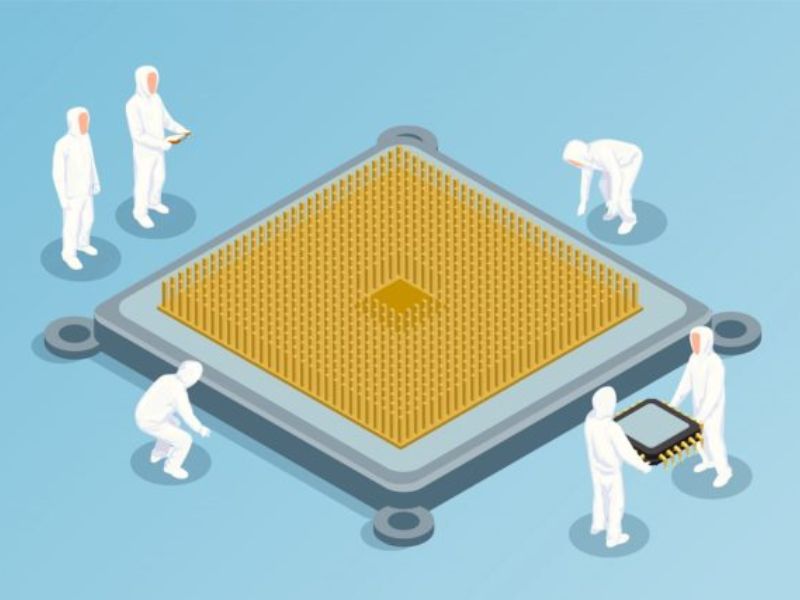
Image source: Created by Freepik
Image source: Created by Freepik
【Disclaimer】
The content of this article only represents the author's personal views and has nothing to do with Creating.
The content, text description and originality have not been verified by this site. This site does not make any guarantee or commitment to this article and all or part of the content, authenticity, completeness, and timeliness. It is for readers' reference only. Please verify the relevant content yourself.
The content of this article only represents the author's personal views and has nothing to do with Creating.
The content, text description and originality have not been verified by this site. This site does not make any guarantee or commitment to this article and all or part of the content, authenticity, completeness, and timeliness. It is for readers' reference only. Please verify the relevant content yourself.
Creating Nano Technologies, Inc.
59 Alley 21 Lane 279, Chung Cheng Road, Yung Kang City, Tainan, TAIWAN
TEL:886-6-2323927 FAX:886-6-2013306 URL: http://www.creating-nanotech.com
59 Alley 21 Lane 279, Chung Cheng Road, Yung Kang City, Tainan, TAIWAN
TEL:886-6-2323927 FAX:886-6-2013306 URL: http://www.creating-nanotech.com