

Malaysia focuses on semiconductors and the digital economy, introducing tax incentives.
Commercial Times
March 3, 2026
Author: Yu-Ting Hung, Commercial Times
Author: Yu-Ting Hung, Commercial Times
By Yu-Ting Hung, Senior Partner of Global Investment Services for Taiwanese Businesses, Deloitte Taiwan
The Malaysian government is actively developing its semiconductor and digital economy. In October 2025, it announced its 2026 budget, proposing numerous policies and tax incentives for semiconductors, carbon reduction, and the digital economy, aiming to solidify its pivotal position in the global semiconductor supply chain and expand the industry chain from packaging and testing to IC design. Given Malaysia's abundant natural resources, neutral and stable tax policies, and investment environment, it is undoubtedly a preferred location for Taiwanese companies to diversify risks and achieve growth in the current volatile environment and geopolitical climate.
Last year, facing the threat of tariffs from Trump, Malaysia completed trade negotiations with the United States, confirming a 19% equivalent tariff and signing a memorandum of understanding on "critical minerals" to deepen its position in the rare earth and critical mineral supply chain. Furthermore, trade agreements such as ASEAN, CPTPP, and RCEP provide tariff preferences, making Malaysia a key investment destination for global companies in semiconductors, green energy, and digital technologies.
Strengthening the Resilience of the Semiconductor Supply Chain
Malaysia is the world's sixth-largest chip exporter, with a packaging and testing market share of nearly 13%. The government announced in its 2026 budget an investment of over RM1.4 billion in the high-tech industry, including RM500 million in financing from the Development Bank of Malaysia (BPMB) under the National Semiconductor Strategy announced in 2024. This financing will strengthen high-value-added sectors such as AI and digitalization, continuously drive industrial upgrading, and enhance supply chain resilience and international competitiveness.
The National Semiconductor Strategy aims to create a semiconductor hub driven by local companies and global talent. The slogan "Malaysia: Bridging Technology for Our Shared Tomorrow" fully embodies this vision. The strategy has five core objectives:
• Attracting a total investment of RM500 billion (including foreign and domestic investment).
• Cultivating 10 leading local design/packaging companies with revenues between RM1 billion and RM4.7 billion, and 100 companies with revenues of RM1 billion.
• Establishing a global semiconductor R&D hub, integrating universities, businesses, and research institutions.
• Train and upgrade 60,000 senior engineers by 2030.
• Provide RM25 billion in financial support for training, R&D, wafer manufacturing, and infrastructure.
Building a Green Digital Supply Chain
To achieve carbon neutrality by 2050, the Malaysian government has released the "National Energy Transition Roadmap," promoting the development of renewable energy sources such as solar and wind power, aiming for 40% renewable energy by 2035, and providing incentives for green energy investment.
To improve tax transparency and accelerate digitalization, Malaysia has announced the full implementation of e-invoices in 2026, simultaneously promoting a carbon tax and green investment plan. The government has also reiterated its intention to launch a carbon tax in 2026, initially targeting the steel and energy industries, and implementing it concurrently with or in conjunction with the "National Carbon Market Policy" and the "Climate Change Act." Furthermore, in response to the EU and UK Carbon Border Adjustment Mechanisms (CBAM), Malaysia is committed to encouraging companies to reduce their product carbon footprint and establishing a transparent carbon emissions reporting system.
With the widespread adoption of 5G and policy support, Malaysia is rapidly becoming a data center hub for ASEAN. The demand for cloud computing and AI is driving upgrades to power and cooling infrastructure, boosting e-commerce and cross-border digital services; the digital economy is projected to account for 25.5% of the economy by 2030.
Malaysia is using policy and capital to promote "semiconductor upgrade × low-carbon transformation × digital economy," providing financing and tax incentives to elevate industry status, while implementing carbon taxes and e-invoices to simultaneously reduce carbon emissions and improve compliance auditing: the former increases added value, while the latter reduces carbon emissions and enhances tax transparency and transaction security.
Related Link: https://www.ctee.com.tw/news/20260303700121-439901
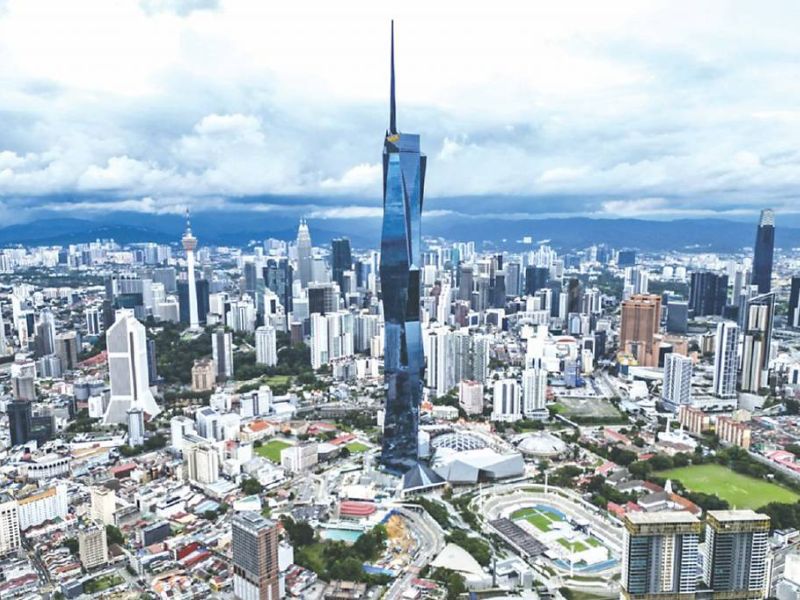
Image Source: Xinhua News Agency
【Disclaimer】
The content of this article only represents the author's personal views and has nothing to do with Creating.
The content, text description and originality have not been verified by this site. This site does not make any guarantee or commitment to this article and all or part of the content, authenticity, completeness, and timeliness. It is for readers' reference only. Please verify the relevant content yourself.
The content of this article only represents the author's personal views and has nothing to do with Creating.
The content, text description and originality have not been verified by this site. This site does not make any guarantee or commitment to this article and all or part of the content, authenticity, completeness, and timeliness. It is for readers' reference only. Please verify the relevant content yourself.
Creating Nano Technologies, Inc.
59 Alley 21 Lane 279, Chung Cheng Road, Yung Kang City, Tainan, TAIWAN
TEL:886-6-2323927 FAX:886-6-2013306 URL: http://www.creating-nanotech.com
59 Alley 21 Lane 279, Chung Cheng Road, Yung Kang City, Tainan, TAIWAN
TEL:886-6-2323927 FAX:886-6-2013306 URL: http://www.creating-nanotech.com